Genetic Factors
Family history significantly increases risk; children with two myopic parents have a several-fold higher risk of developing myopia.

Evidence-based information to help you understand causes, progression, and management options for myopia in children and adults.
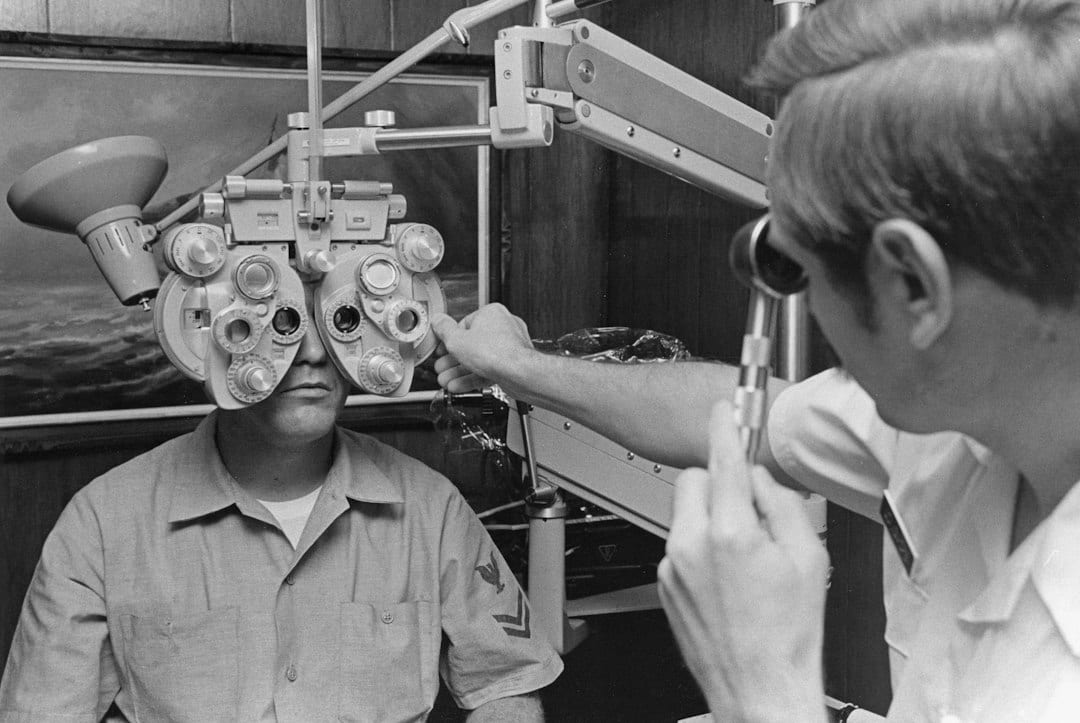
Myopia, or nearsightedness, is a refractive error where distant objects appear blurry while close objects remain clear. It occurs when the eye grows too long from front to back, or when the cornea is too curved, causing light to focus in front of the retina instead of directly on it.
About a third of people worldwide are myopic today, and a widely cited study (Holden et al., 2016) projects nearly half the world's population (49.8%) by 2050. In Singapore, about 83% of young adults and 65% of Primary 6 children are myopic, according to the Ministry of Health. That is among the highest rates in the world.
Learn more about myopia progression
Family history significantly increases risk; children with two myopic parents have a several-fold higher risk of developing myopia.
Limited outdoor time, prolonged near work (reading, screens), and poor lighting conditions contribute to onset and progression.
Typically develops in childhood, progresses through school years, and stabilizes in early adulthood.
Higher prevalence in East Asian populations, with Singapore consistently reporting among the highest rates globally.
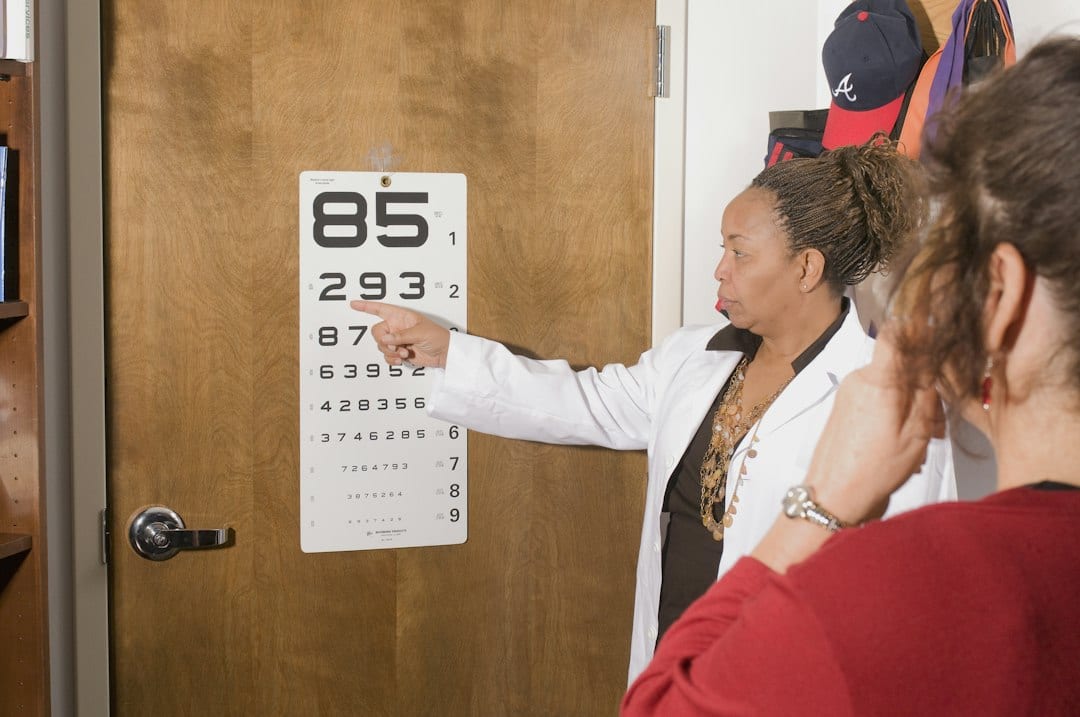
Reading letters on a chart to assess clarity of vision at various distances.
Determining the lens power needed to correct the refractive error.
Checking internal and external eye structures for overall ocular health.
Advanced assessment of eye growth, especially important for myopia management planning.
Note: Diagnosis requires a comprehensive examination by a qualified optometrist or ophthalmologist. Online vision tests cannot diagnose myopia.
Single-vision glasses and contact lenses correct blurred vision but do not slow myopia progression. They remain the starting point for many patients.
Specialized lens designs (DIMS, HAL, progressive addition) that may slow progression in children. Fitting and follow-up require qualified practitioners.
Overnight corneal reshaping lenses that provide daytime freedom from glasses. Requires specialist fitting, rigorous hygiene, and regular monitoring.
Soft lenses designed for myopia progression control in children. Efficacy and suitability vary; professional assessment is essential.
Low-dose atropine prescribed and monitored by ophthalmologists. Availability and regulatory status vary by market; discuss with a specialist.
Increased outdoor time (2+ hours daily), regular breaks from near work, proper working distance and lighting. Supported by research from the Singapore Eye Research Institute and international studies on time outdoors.
Read the research summary
Childhood represents a critical window for myopia intervention. The earlier myopia begins, the more years it has to progress—and the higher the final prescription and associated complication risk.
Ensure proper working distance (at least arm's length), adequate lighting, and the 20-20-20 rule to reduce eye strain during near work.
Contact lenses and protective eyewear can enhance performance and safety. Discuss options with your eyecare provider for your specific activities.
Certain occupations have vision requirements. Early management and regular monitoring help preserve career options that depend on uncorrected visual acuity.
Keep backup glasses accessible, especially for travel and emergencies. Consider daily disposable contacts for convenience when away from home.
High myopia carries increased risk of retinal detachment, glaucoma, and myopic maculopathy. Regular monitoring helps detect issues early.
Eye clinics and optometrists whose listing names mention myopia or ortho-k, plus the full directory of optometrists for routine checks.
Listings are from public business information (checked Oct 2026), not endorsements. Ask any provider which myopia control options they offer.
There is currently no cure for myopia. Once the eye has elongated, that structural change is permanent. However, several management options may slow progression in children, and correction options provide clear vision for all ages. Consult a qualified eyecare professional to discuss what is appropriate for your situation.
No. Wearing prescribed glasses or contact lenses does not cause myopia to worsen. Under-correction (wearing weaker lenses than prescribed) has not been shown to slow progression and may lead to eye strain. Use the correction your provider recommends.
Children with progressing myopia should typically be monitored every 6 months, or as advised by their eyecare provider. More frequent reviews may be recommended when starting a new management strategy.
Screen time is one factor among several. Research suggests that prolonged near work—including screens—combined with limited outdoor time, increases risk. Singapore's Health Promotion Board and Singapore National Eye Centre recommend at least 2 hours of outdoor activity daily as a protective measure.
Standard correction (single-vision glasses or contacts) improves clarity but does not slow eye growth. Myopia control strategies—such as specialized spectacles, ortho-K, multifocal contacts, or low-dose atropine—aim to reduce the rate of progression in children. Not all options suit every child; professional guidance is essential.
Ortho-K lenses are generally considered safe when fitted and monitored by a qualified practitioner, with rigorous hygiene and follow-up. Risks include infection if care protocols are not followed. Suitability depends on individual eye characteristics and maturity; discuss candidacy with a specialist.
Myopia typically progresses through childhood and stabilises in early adulthood. It does not usually 'outgrow' in the way some childhood conditions do. Early management is important to reduce final prescription strength and associated long-term risks.
High myopia is generally defined as a prescription stronger than -6.00 dioptres or an axial length significantly above average. It carries increased lifetime risk of retinal detachment, glaucoma, and myopic maculopathy. Regular monitoring helps detect issues early.